What's Really in the Bowl: Nutrient Gaps in Modern Dog Food
Whatever you feed — kibble, fresh, raw — there's a gap between ‘complete and balanced’ and clinically meaningful doses. Here's where it sits.
Key takeaway
‘Complete and balanced’ means a diet meets the legal minimums to prevent deficiency — not that it delivers the clinically meaningful doses of marine omega-3, joint actives or probiotics shown to support healthspan in canine trials. This is true across kibble, fresh, gently-cooked and raw. The fix isn’t to switch diet again; it’s to add a focused daily nutrient layer that fills the studied-dose gap on top of whatever you already feed.
Contents (7)
The dog food aisle has never been bigger and the debate around it has never been louder. Kibble, gently-cooked fresh, raw, freeze-dried, half-and-half — every camp has strong opinions and most of them have a kernel of truth. What gets lost in the shouting is a more useful question: regardless of which camp you’re in, what does your dog’s daily bowl actually deliver in clinical-dose terms? The honest answer, across almost every category, is that the bowl handles the foundation well and leaves a real gap on the actives that matter most for joints, skin, gut and longevity. This guide explains why.
What ‘complete and balanced’ really means
When a label says “complete and balanced” (in the US, “meets AAFCO profiles”; in the EU/UK, the FEDIAF nutritional guidelines), it means one specific thing: the food contains, at minimum, the nutrients required to prevent clinical deficiency in a generic dog of that life stage. That’s an essential and useful baseline. It is not the same as delivering nutrients at the doses the research uses to support joint, gut, skin and longevity outcomes.
Two examples illustrate the gap:
- The FEDIAF minimum for EPA + DHA in adult dogs is a fraction of the doses used in canine osteoarthritis trials that produced meaningful mobility improvements.
- “Glucosamine” on the label of a complete diet is often present at a tiny fraction of the dose that clinical trials in dogs actually used.
This isn’t a scandal; it’s economics. Adding studied-dose actives across a 15 kg bag would put the price out of reach for most owners and shorten shelf life. The solution most premium nutrition designers reach is the same: the diet handles the foundation, and a small daily nutrient layer handles the targeted actives.
Kibble: the honest picture
Good modern kibble is a remarkable feat of food science: shelf-stable, micronutrient-fortified, consistent and affordable. The trade-offs:
- Heat processing. The extrusion process oxidises some of the more fragile actives — particularly long-chain omega-3 fatty acids — even when they’re added back at the end.
- Limited fresh inputs. Phytonutrients from fresh fruits, vegetables and herbs are difficult to preserve at scale.
- Probiotic limitations. Most live cultures don’t survive extrusion. Probiotics in kibble are often sprayed on after, and viable CFU counts at end-of-shelf-life are typically modest.
None of this makes kibble a bad choice. It does mean a daily layer of marine omega-3, joint actives and a credible probiotic is doing real work on top of it.
Fresh and gently-cooked: the honest picture
Fresh and gently-cooked diets address several kibble limitations — lower processing temperatures, more recognisable ingredients, often better palatability. The trade-offs are different:
- Cost and supply. Hard to scale, more expensive per kg.
- Formulation variability. A “complete and balanced” fresh formula still meets the same minimums — it doesn’t guarantee studied-dose joint or skin actives.
- Storage and freshness of omega-3. Long-chain omega-3 oxidises quickly. Even good fresh diets can lose meaningful EPA + DHA between manufacture and bowl.
Raw: the honest picture
Well-formulated raw can be excellent. Poorly-formulated raw is the diet category where we see the biggest nutrient gaps in practice, because home preparation rarely hits the FEDIAF micronutrient profile precisely. Even commercial complete raw tends to be short on:
- Marine omega-3 (EPA + DHA) at clinical doses — oily fish helps but isn’t typically present at studied levels.
- Joint actives at clinical doses — cartilage and offal contribute but not at trial-grade quantities.
- Specific characterised probiotic strains at guaranteed end-of-shelf-life CFU counts.
This isn’t an argument for or against raw. It’s an argument that the studied actives sit outside what any normal raw bowl reliably delivers.
Where the gap consistently sits
Across every diet camp, the same four actives turn up under-dosed:
- Marine omega-3 (EPA + DHA) — the single best-studied healthspan nutrient in dogs, consistently under-dosed by complete diets.
- Joint actives — green-lipped mussel, collagen peptides, glucosamine and chondroitin at the doses canine trials actually used.
- Multi-strain probiotics with characterised strains at guaranteed CFU counts.
- Targeted antioxidants and trace minerals — vitamin E and chelated trace minerals beyond legal minimums.
This is exactly the gap a daily nutrient layer is designed to fill.
How to read a dog food label without losing your weekend
- Ignore the marketing on the front. “Holistic,” “premium” and “super-premium” have no regulatory meaning.
- Read the named protein first. A specific named meat (“chicken,” not “meat derivatives”) is a good sign.
- Look for guaranteed analysis with named omega-3. “Omega-3 1.5%” is not the same as “EPA 0.4%, DHA 0.3%.”
- Treat ‘proprietary blend’ as a red flag for actives. If they don’t show the doses, assume they’re low.
- Match feeding guidelines to body condition, not the other way round. Adjust quantity until your dog is lean.
How K9·1 fits, regardless of what you feed
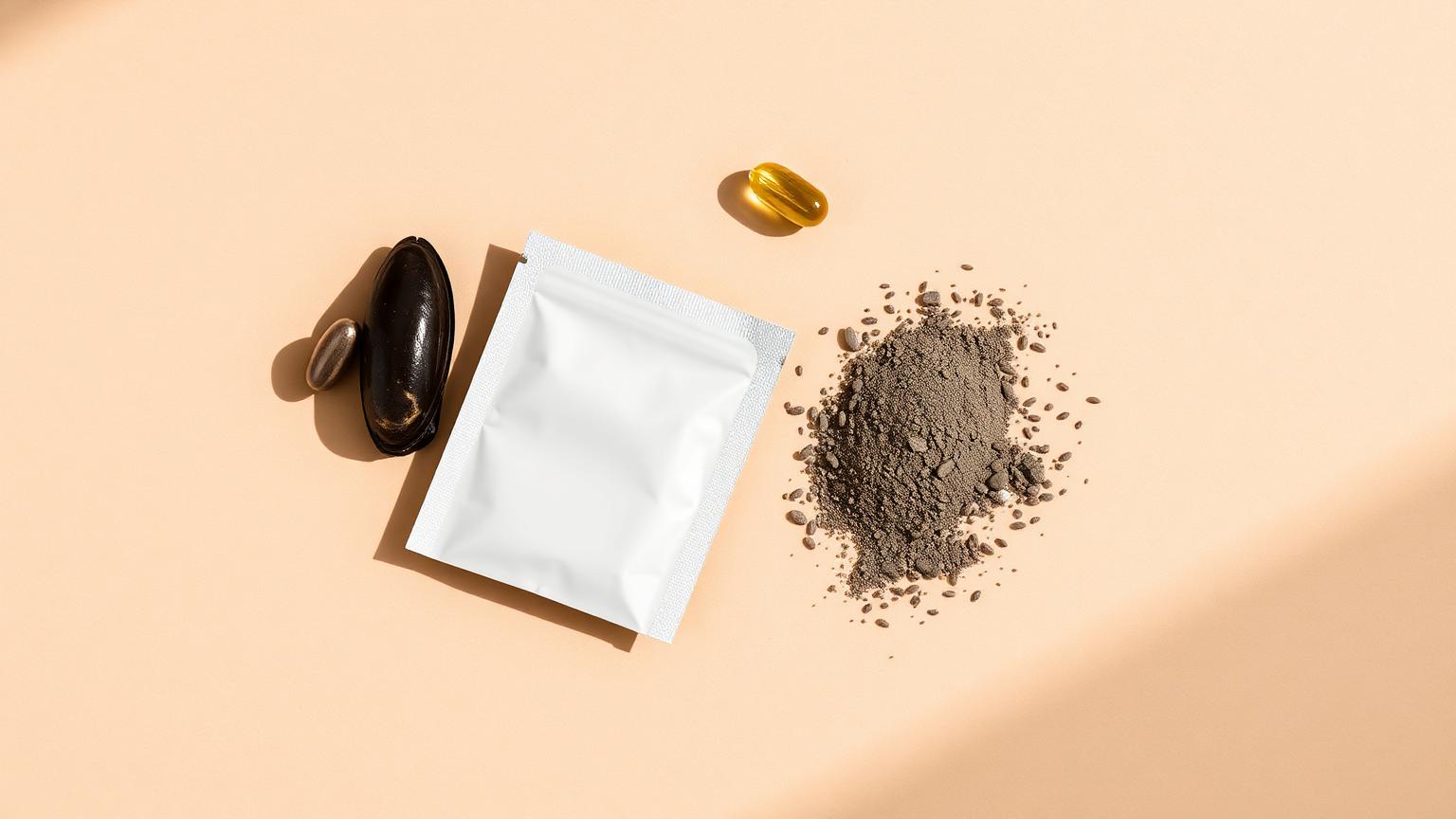
K9·1 wasn’t built to replace any diet camp. It was built to fill the studied-dose gap that every camp leaves — in one daily sachet that goes on top of the food: 900 mg EPA + DHA, 1,200 mg bioactive collagen peptides, 400 mg green-lipped mussel, a characterised multi-strain probiotic with prebiotic fibres, vitamin E, chelated trace minerals, and reishi + turkey-tail mushrooms. Kibble, fresh, raw or anything in between — the layer is the same, because the gap is the same.
Not sure where to start? Our 60-second Assessment routes you to the right protocol for your dog's breed, age and lifestyle. Take the Assessment →
FAQ
Common questions
References
- FEDIAF — Nutritional Guidelines for Complete and Complementary Pet Food for Cats and Dogs
- AAFCO — Dog and Cat Food Nutrient Profiles
- Bauer JE — Therapeutic use of fish oils in companion animals (J Am Vet Med Assoc, 2011)
- Davies M — Variability in content of homemade diets for canine chronic kidney disease (Vet Rec, 2014)
Educational content only. K9·1 supports everyday canine wellness and is not a substitute for veterinary advice, diagnosis or treatment. If your dog is on medication or has a specific health condition, talk to your vet.