10 Early Signs of Joint Pain in Dogs (and What to Do)
Limping is the late signal. These are the small, easy-to-miss changes that show up months earlier — and what to do about them.
Key takeaway
Dogs are evolutionary masters of hiding discomfort. The first signs of joint pain are almost always behavioural, not orthopaedic — a half-second pause before jumping, a shorter stride, a new sleeping position, less enthusiasm at the door. Two or three of these together in a dog over five is a strong signal. Limping is a late, not early, sign — and persistent lameness is always a vet visit.
Contents (12)
- 1. 1. A pause before jumping
- 2. 2. Stairs taken one at a time
- 3. 3. Stiffness on rising — that loosens up
- 4. 4. Lagging on the back half of walks
- 5. 5. A new sleeping position
- 6. 6. Reluctance to be touched in a specific area
- 7. 7. Sitting with a leg kicked out
- 8. 8. Subtle gait changes
- 9. 9. Less enthusiasm for things they used to love
- 10. 10. Licking a joint
- 11. What to do next
- 12. How K9·1 fits
Owners rarely miss a limp. What they almost always miss is the six to eighteen months before the limp — the period where a dog is quietly compensating for a sore joint and giving you small, easy-to-rationalise signals that something is starting. Catching those early matters. The earlier you support a stiffening joint, the more of the cartilage you keep. Here are the ten signals worth knowing, in roughly the order they tend to show up.
1. A pause before jumping
The classic earliest sign. Your dog used to launch into the car or onto the sofa without thinking. Now there’s a half-second of consideration — sometimes a tiny shift of weight, sometimes a glance at you. Owners read it as “hesitation” or “maturity.” It’s usually the shoulders, elbows or back saying this is going to hurt.
2. Stairs taken one at a time
Especially descending. Dogs with sore hips or wrists shift to a more careful, one-step-at-a-time pattern, often with a slight head dip. The walls or the railing become more interesting than they used to be.
3. Stiffness on rising — that loosens up
Up slowly, walk it out, fine in five minutes. This is one of the most reliable early signs of osteoarthritis and one of the easiest to dismiss precisely because the dog seems fine once they’re moving.
4. Lagging on the back half of walks
The dog that used to drag you home is now drifting behind you. Walks get a little shorter by silent mutual agreement. A dog whose joints are tiring sooner is almost always a dog who is in early discomfort.
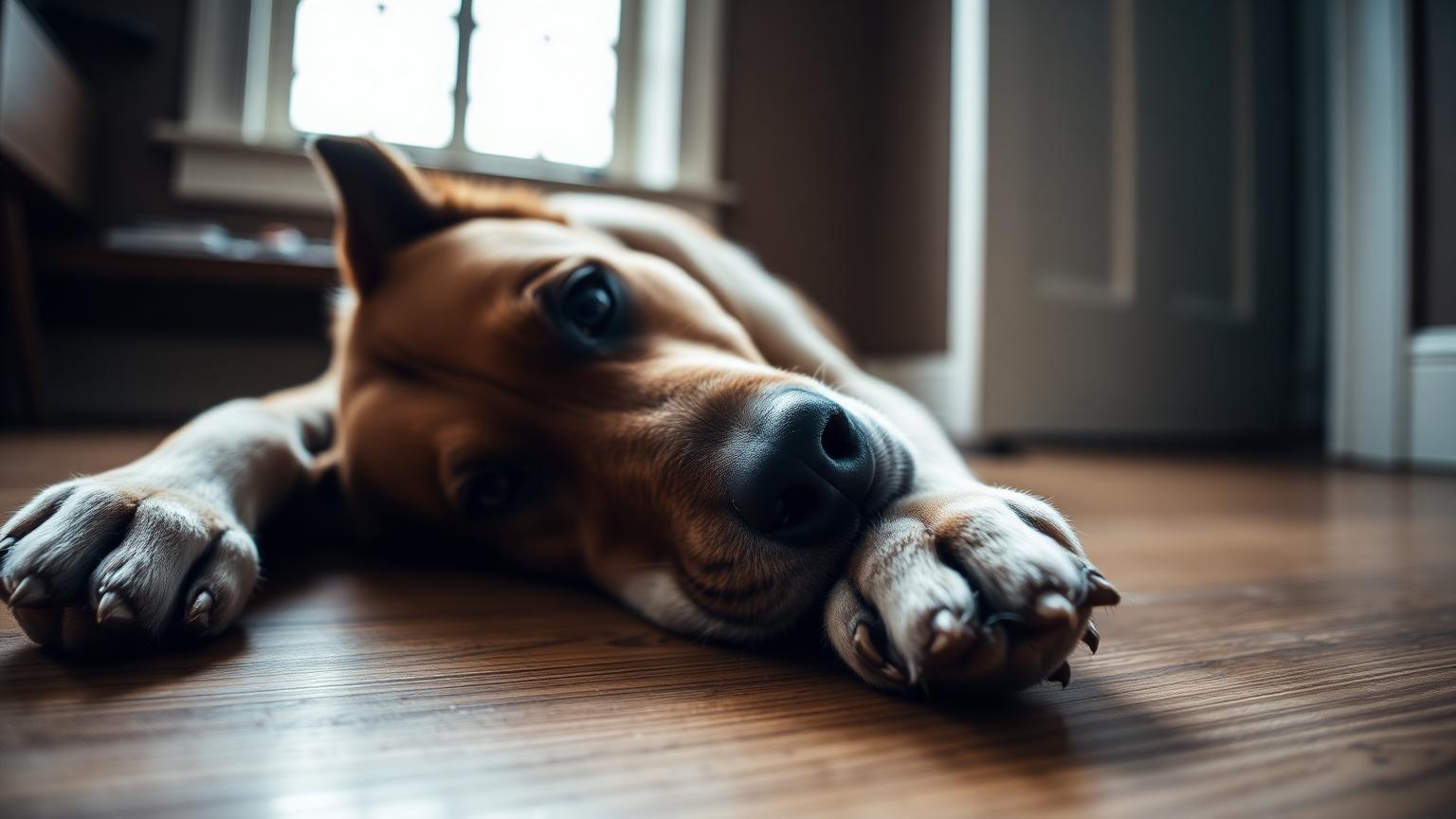
5. A new sleeping position
Curled-up sleepers who suddenly prefer flat-out positions, or vice versa, are usually choosing the position that loads sore joints least. A dog who suddenly wants to sleep on the cool tiles instead of the bed is worth a closer look at the hips.
6. Reluctance to be touched in a specific area
A flinch, a head turn, a soft growl when you brush past the hips or run a hand down the spine. Dogs rarely volunteer pain — pay attention when they do.
7. Sitting with a leg kicked out
A “sloppy sit” with one back leg splayed out to the side often means one hip or knee is uncomfortable in the normal seated position. Worth noting which side — it tends to stay consistent.
8. Subtle gait changes
A shorter stride, a head bob at the trot (head down on the sound leg, up on the sore one for forelimb lameness), or bunny-hopping with the back legs together. Easiest to spot on video — a 30-second clip of your dog trotting away from and back to you will show more than your eye alone.
9. Less enthusiasm for things they used to love
Not as keen to fetch. Not as fast to the door. Less interested in roughhousing with the other dog. Behaviour change is one of the most under-recognised pain signals in dogs.
10. Licking a joint
Persistent licking of a wrist, elbow or hock — especially if it’s started recently — is often a self-soothing behaviour for a sore joint underneath.
What to do next
One of these, in isolation, in a young dog: probably nothing. Two or three together, especially in a dog over five or in a predisposed breed: act.
The sensible sequence:
- Video your dog. 30 seconds trotting away and back to you, plus a clip of them getting up from rest. Useful for the vet, and useful for tracking change over time.
- Audit weight and movement. Get them lean and walk them daily on soft, varied ground rather than in weekend bursts.
- Start daily nutritional support. Marine omega-3 (EPA + DHA), green-lipped mussel and collagen peptides at studied doses — see the full joint guide.
- Book a vet check if anything is persistent or worsening. A frank limp lasting more than 24–48 hours, sudden reluctance to bear weight, or any signs of acute pain are a vet visit today, not next week.
The earlier in this sequence you start, the bigger the difference daily support tends to make.
How K9·1 fits
K9·1 was built as the daily nutrient layer for exactly this picture — dogs in the influence window where the joints are starting to ask for help but nothing acute has happened yet. The sachet includes the joint and anti-inflammatory actives the canine literature consistently supports, at the doses they were actually studied at, in one daily scoop that goes on the food.
Not sure where to start? Our 60-second Assessment routes you to the right protocol for your dog's breed, age and lifestyle. Take the Assessment →
FAQ
Common questions
References
Educational content only. K9·1 supports everyday canine wellness and is not a substitute for veterinary advice, diagnosis or treatment. If your dog is on medication or has a specific health condition, talk to your vet.